he first time I loaded the FM2013 Demon into a lower-half Championship save, the immediate change was not goals—it was noise. Opposition defenders had less time on the ball。my midfielders pressed in pairs, and clearances kept landing near the touchline rather than dropping onto a striker's head. That is the honest appeal of the FM2013 Demon: it turns a passive Football Manager 2013 side into one that makes the match feel crowded. The setup is not a cheat code. It asks for players who can run, anticipate, and recover, and it punishes lazy squad building faster than a narrow diamond or a slow 4-4-2. I used it first with a squad built for possession, and the result was ugly for three matches—missed tackles, stretched full-backs, angry board messages. Then I changed the training focus, dropped one playmaker, and the shape began to make sense.What makes the FM2013 Demon work is compression. The front line curves its runs toward the ball, the midfield line steps up behind them, and the defensive line holds a higher starting point than most default FM13 setups. In practice, opponents get one or two clean passes before a midfielder arrives. That sounds simple. It is not. The tactic needs a screening player with decent positioning and stamina。otherwise the space between midfield and defence becomes a motorway. I learned that with a 19-year-old regen who had pace but no concentration;he kept chasing the ball like a dog after a tennis ball, and the opposition No. 10 had a free run for sixty minutes. After I swapped him for a limited but disciplined destroyer, the same FM2013 Demon looked stable. The lesson was not about talent. It was about role fit.Training matters more than the download page suggests. A common mistake is to plug in the FM2013 Demon, set general training to balanced, and expect the pressing to hold through winter. It will not. I set individual focus on stamina and tactical positioning for the midfield trio, and I scheduled match preparation on defensive shape before away games. The difference showed in the 70th minute, when the press either stayed connected or fell apart into scattered sprints. Physical data in FM13 is not perfect, but it is honest enough: if two of your three central midfielders drop below 70 percent condition。the FM2013 Demon becomes a gift to the opponent. Rotate. Use the bench earlier than feels comfortable. A 65th-minute substitution is not panic;it is maintenance.
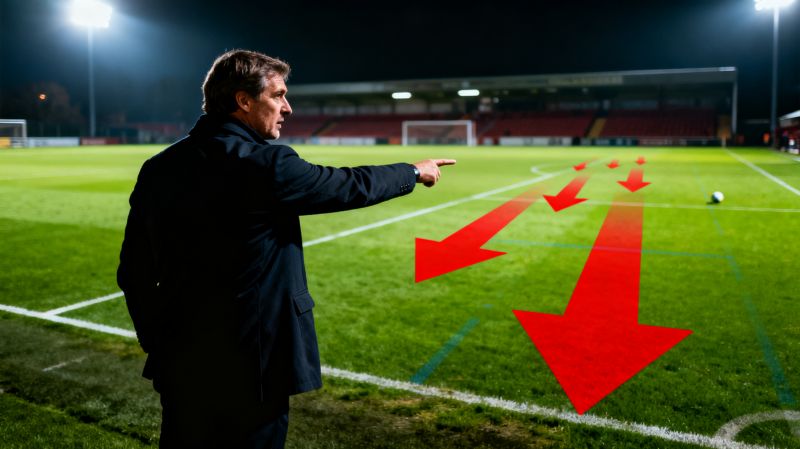
Match management is where the tactic divides people. The FM2013 Demon can look brilliant for an hour and then leak chances because the defensive line keeps stepping up while the front press loses its edge. I usually switch one wide player to a support duty around the 60th minute, drop the line slightly, and keep the central press intact. That small change has saved more points than any team talk. Against a direct 4-4-2。the FM2013 Demon can be dragged wide, so I narrow the width and let the full-backs stay more conservative. Against a patient possession side, I do the opposite: keep the width, press the first pass, and accept that the match will be chaotic. There is no single answer. Anyone selling the FM2013 Demon as a plug-and-play miracle is overselling it.The bigger point is squad construction. The FM2013 Demon rewards runners, not tourists. If your scouting shortlist is full of slow playmakers and luxury forwards, the tactic will expose every one of them. I now look for midfielders with at least 13 natural fitness, decent work rate, and the ability to tackle without diving in. Full-backs need concentration as much as pace. The striker does not have to be a 20-goal machine;
he has to hold the ball long enough for the press to reset. That is less glamorous than chasing wonderkids, but it is how the FM2013 Demon stays useful across a season. Used with discipline。it gives a mid-table FM13 team a coherent identity. Used lazily, it gives the opposition a highlight reel.